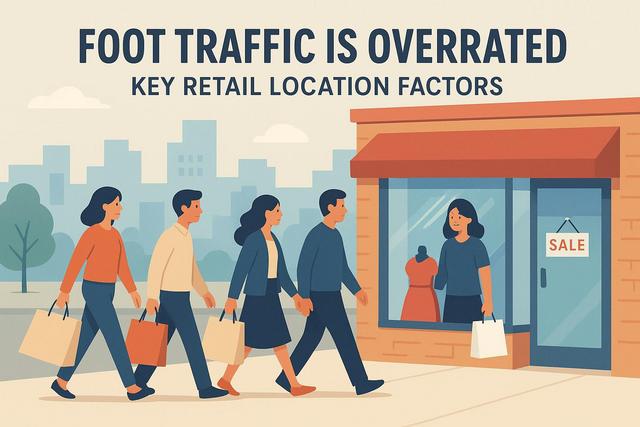
For years, foot traffic has been hailed as the golden metric in retail success, used by businesses worldwide to assess the viability of a location. However, as consumer behavior evolves, it's become evident that foot traffic alone is not an all-encompassing measure of potential success. In this article, we'll explore why foot traffic is overrated and delve into other critical location factors that are gaining prominence in today's retail analytics landscape.
The Foot Traffic Myth: Challenging Conventional Wisdom
Understanding the Traditional Focus on Foot Traffic
Foot traffic refers to the number of people passing by or through a particular location. Historically, businesses have prioritized high foot traffic areas, believing they correlate directly with increased sales. Retail locations in bustling downtowns or near popular attractions were favored for this reason.
However, this traditional wisdom fails to acknowledge the complexities of consumer behavior. Not all pedestrians are potential customers, and not all locations with high foot traffic guarantee higher conversion rates.
Case Study: A Retail Store in Times Square
Take, for example, a retail store in New York's Times Square, one of the world's busiest pedestrian zones. Despite the high foot traffic, numerous retailers have reported challenges in converting these passersby into paying customers due to the area’s high tourist concentration, who often view stores as attractions rather than shopping destinations.
Retail Analytics: A Data-Driven Approach
Beyond Foot Traffic: Comprehensive Consumer Insights
Retail analytics now allows businesses to gather data not just on customer volume, but on buyer behaviors, preferences, and demographics. Technologies like beacon technology and location-based analytics offer deeper insights.
Instead of merely counting feet, retailers can monitor how long customers engage with certain products, which paths they follow within the store, and what prompts a purchase.
Actionable Insight from Data
Businesses should leverage data analytics tools to segment customer data, allowing for targeted marketing and inventory decisions. For example, if analysis shows that a significant portion of store visitors who engage with electronics are teenagers, a retailer might adjust inventory to appeal to this demographic.
Location Strategy: Critical Considerations
Accessibility and Convenience
Accessibility is a critical yet often underrated factor. Locations that are easily accessible through various transportation modes often fare better in attracting loyal customers.
For instance, consider a suburban mall accessible by car and public transport. Despite not being in a high foot traffic area, its accessibility draws consistent local shoppers.
Digital Presence and Local Online Search
Increasingly, businesses are turning to their digital footprint to drive physical visits. Having a strong online presence with accurate details on Google My Business leads can direct targeted traffic to a location.
Retailers should invest in local SEO to capture search queries and use reviews and local content to build credibility.
Competitive Analysis: Studying the Surroundings
Competitor Influence
Understanding the competitive landscape is essential. Even an area with moderate foot traffic can be more attractive if the competition is minimal or weaker.
Consider a coffee shop near a popular chain. It might grapple with customer loyalty not due to foot traffic disparities but due to competitive pressures.
Complementary Businesses
The presence of complementary businesses enhances potential sales. For example, a bookstore next to a coffee shop might see increased customers during the afternoon because these businesses are thought of as complementary activity zones.
Technology Integration: Embracing Modern Retail Tools
In-store Technology and Customer Experience
Integrating technologies like mobile payment systems, informational kiosks, or augmented reality displays can enhance shopping experiences and increase conversion rates, independent of foot traffic numbers.
Case Study: A Tech-Savvy Boutique
A boutique in San Francisco uses AR to let customers visualize clothing ensembles. This tech-forward approach has significantly increased both the store's customer engagement and sales, even though it’s not in a high foot traffic area.
Conclusion: The Future Beyond Foot Traffic
Integrated Location Strategy
While foot traffic will always be a consideration, its supremacy as a metric is waning. Businesses are advised to integrate multiple location factors including accessibility, digital presence, and competitive environment analysis into their strategy.
Actionable Takeaways
- Utilize advanced retail analytics to understand customer behavior and optimize inventory.
- Prioritize accessibility to make stores more attractive and convenient for consumers.
- Enhance your digital presence to convert online interest into in-store visits.
- Analyze market competition and alignment with complementary businesses to strengthen market position.
- Incorporate technology in-store to increase customer engagement and satisfaction.
By adopting a more holistic approach to location strategy, businesses can not only enhance their market presence but also increase their revenue potential without solely relying on foot traffic.

