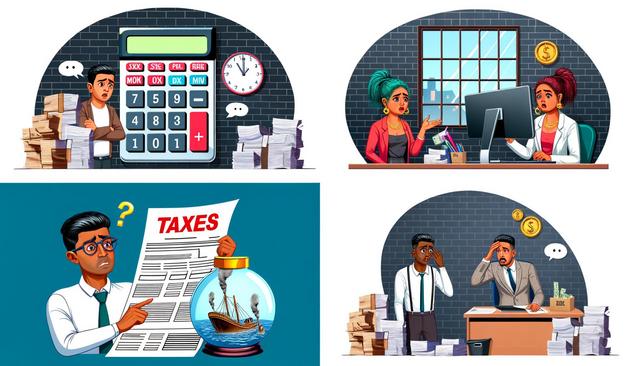
Navigating the world of taxes is a crucial aspect of running a successful small business. However, the complexity of tax regulations can often lead to costly errors, impacting your bottom line and jeopardizing your compliance with the Internal Revenue Service (IRS). This comprehensive guide will delve into the most common tax mistakes small business owners make and provide actionable strategies to prevent them.
Understanding Small Business Taxes
Managing taxes effectively is vital for any small business. Taxes can have a significant impact on your net profits and financial health, requiring diligent oversight and strategic planning. Complications arise with the IRS when small businesses fail to adhere to tax regulations due to oversight or errors.
Common Tax Mistakes and Prevention Strategies
1. Not Separating Business and Personal Expenses
Many small business owners run into trouble when they mix personal and business expenses. This can lead to inaccurate accounting records and increase the risk of an IRS audit.
Prevention Strategy
- Maintain separate bank accounts and credit cards for personal and business use.
- Keep detailed records of every transaction and use reliable accounting software, like QuickBooks, that helps categorize expenses correctly.
2. Misclassifying Employees and Independent Contractors
The classification of workers is crucial. Misclassifying an employee as an independent contractor can lead to penalties and back taxes.
Prevention Strategy
- Familiarize yourself with the IRS guidelines on employee versus contractor classification.
- Use the IRS guidelines to properly categorize your workers.
3. Ignoring Estimated Tax Payments
Small businesses often underestimate their tax obligations by failing to make estimated tax payments throughout the year, leading to unexpected large tax bills and potential penalties.
Prevention Strategy
- Calculate your estimated taxes quarterly and make timely payments.
- Utilize tools like TurboTax to help estimate and schedule your payments.
4. Deducting Ineligible Expenses
Claiming deductions for ineligible expenses can raise red flags for the IRS. Common issues include misinterpreting what qualifies as a tax deduction.
Prevention Strategy
- Refer to IRS guidelines or consult with a tax professional to understand deductible expenses.
- Keep comprehensive documentation to justify deductions during an audit.
5. Failing to Plan for Tax Season
Many small businesses wait until the last minute to deal with taxes, often resulting in costly mistakes and oversights.
Prevention Strategy
- Plan throughout the year by organizing financial documents and bookkeeping records.
- Implement systems for tracking income and expenses efficiently, such as cloud-based accounting services.
6. Overlooking the Home Office Deduction
Small business owners sometimes forgo the home office deduction out of fear of audit. However, it's a legitimate deduction for eligible business use.
Prevention Strategy
- Ensure your home office is used exclusively for business and qualifies for the deduction as per IRS rules.
- Maintain clear records of the space and its use as business-related.
Importance of Professional Guidance
Engaging with a tax professional or CPA can provide authoritative advice and scrutiny of your financials, ensuring compliance with tax laws and optimization of tax benefits.
Case Study: Avoiding Penalties with Professional Help
A small retail business avoided an IRS audit by consulting a tax professional who identified misclassified employees and corrected these errors before submitting the tax returns.
External Resources
Conclusion:
Avoiding tax mistakes is imperative for the financial health and longevity of your small business. By adopting best practices, such as separating expenses, correctly classifying workers, and maintaining robust records, you can minimize your tax risk. Consider leveraging professional tax advice and utilizing comprehensive accounting tools to ensure compliance and efficiency.
Actionable Takeaways
- Establish clear distinctions between personal and business finances.
- Understand and apply IRS guidelines properly for worker classification and expense deductions.
- Importance of regular tax planning and payment to avoid unforeseen liabilities.

