
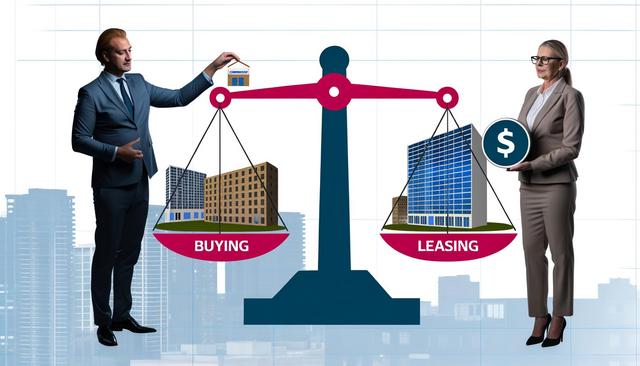
Deciding whether to buy or lease a commercial property is a significant decision for any business. Each option has its own set of advantages and challenges that can impact your business's financial health and operations. This guide will help you weigh the pros and cons, providing you with the insights needed to make an informed choice.
Understanding the Basics: Buying vs. Leasing
Before diving into the specifics, it's crucial to understand what each option entails. When you buy a commercial property, you acquire ownership of the real estate. This means you're responsible for its upkeep, taxes, and other obligations. On the other hand, leasing implies renting a space from a property owner, with the flexibility to move once the lease term ends.
Ownership Benefits
Owning a property can be an excellent investment if you plan to occupy it for a long time. Benefits include building equity, potential tax advantages, and more control over the property. Resources like the IRS guidelines can provide additional insights into tax deductions for property owners.
Leasing Advantages
Leasing offers flexibility and lower initial costs. It's ideal for businesses anticipating growth in space requirements or uncertain future prospects. Check scenarios from Forbes for industry trends and economic factors that might influence your decision.
Pros and Cons of Buying a Commercial Property
Pros of Buying
- Long-term Asset: Building an asset over time which may appreciate in value.
- Customization: Freedom to alter the space to fit your business's specific needs.
- Stability: Fixed costs can aid in financial planning.
Cons of Buying
- High Initial Costs: Requires a substantial down payment and closing costs.
- Financial Risk: Property values can fluctuate, affecting your financial portfolio.
- Responsibility: The onus of maintenance and repairs lies on the owner.
Pros and Cons of Leasing a Commercial Property
Pros of Leasing
- Less Initial Investment: Typically requires lower upfront costs than buying.
- Flexibility: Easier to relocate as business needs change.
- Focus on Business: Redirect capital that would be tied in property investment into core business operations.
Cons of Leasing
- Variable Costs: Rent can increase significantly at lease renewal.
- Lack of Equity: Lease payments do not contribute to asset ownership.
- Potential for Disruption: If the property owner decides to sell, you may need to relocate.
Case Studies and Real-World Insights
Consider a tech startup in Silicon Valley. Given the rapid growth and varying office space needs, leasing makes more sense due to the flexibility and lower initial expense (Wall Street Journal insights). Conversely, a family-run restaurant with a stable business plan may benefit more from buying to establish and grow the business predictably.
Actionable Takeaways
When making your choice, consider the following:
- Assess your financial health and predictability of future cash flows.
- Evaluate the business growth trajectory and the potential need for more or less space.
- Research property market trends and forecasts using reliable sources like Zillow Research.
Conclusion: Balancing the Decision
Your choice between buying and leasing depends on your business's specific situation and financial goals. Consider consulting with financial advisors or commercial real estate experts who can provide personalized advice based on your business context. Long-term stability, financial flexibility, and strategic goals should guide your decision-making process.

