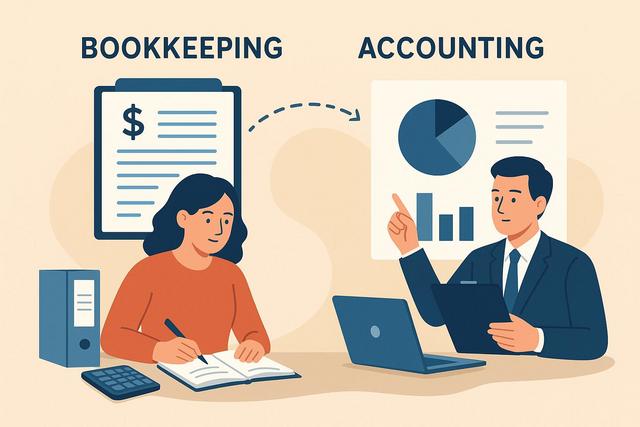
In the world of business finance, bookkeeping and accounting play crucial roles in managing financial records and ensuring the stability of a company's financial health. However, many people often confuse these two disciplines. This guide will help you understand the distinct functions of bookkeeping and accounting, allowing you to make informed decisions about when and how to use each.
Understanding Bookkeeping
Bookkeeping is the process of recording and organizing all financial transactions of a business. It forms the foundation of a company's accounting system by consistently and accurately documenting every single financial interaction.
Roles and Responsibilities
Bookkeepers manage daily financial records. They record transactions such as sales, receipts, payments, and invoices. Their work is detailed, ensuring that every financial action is accurately noted.
- Recording all financial transactions;
- Managing invoices and receipts;
- Reconciling bank statements.
Real-World Example
Consider a small retail business. The bookkeeper would record each sale, manage inventory-related transactions, and ensure that all incoming cash is properly documented. This daily logging prevents errors that could lead to financial issues down the line.
Diving Into Accounting
Accounting builds on the information provided by bookkeeping. Accountants analyze, interpret, and summarize financial data to provide insights that help businesses make strategic decisions.
Primary Functions of Accountants
While bookkeepers handle daily entries, accountants take a broader view that encompasses:
- Analyzing financial statements;
- Preparing tax returns;
- Providing financial advice and forecasts.
Accounting in Action
Picture a medium-sized company at the end of its fiscal year. Accountants would audit the bookkeeping records to prepare detailed financial statements, assess performance, and propose budget adjustments to optimize future growth.
Comparison Table: Bookkeeping vs Accounting
| Criteria | Bookkeeping | Accounting |
|---|---|---|
| Purpose | Record financial transactions | Analyze and interpret financial data |
| Tools Used | Excel, QuickBooks | SAP, Oracle Financials |
| Skills Required | Attention to detail, data entry | Analytical skills, strategic planning |
Common Mistakes to Avoid
One common misconception is that bookkeeping and accounting are interchangeable terms. This misunderstanding can lead to incomplete financial records or misinformed strategic decisions.
Another risk is neglecting either function due to budget constraints, potentially resulting in severe financial inaccuracies.
Strategic Insights for Business Owners
For small businesses, hiring a bookkeeper can ensure financial data is accurate and current. For strategic planning and compliance, consulting an accountant is crucial.
Utilizing software like QuickBooks for bookkeeping and SAP for accounting can streamline processes and improve accuracy.
FAQ Section
Do small businesses need both a bookkeeper and an accountant?
While small businesses may start with a bookkeeper, growing complexity often necessitates an accountant's expertise.
Can accounting software replace human bookkeepers?
Software like QuickBooks can aid in bookkeeping tasks, but the strategic analysis offered by accountants remains invaluable.
How often should financial statements be analyzed?
Quarterly analysis is recommended for regular business performance evaluations.
Conclusion
Understanding the distinct roles of bookkeeping and accounting can significantly impact the efficiency and accuracy of your business's financial management. While bookkeepers manage the day-to-day financial records, accountants play a critical role in analyzing this data to inform strategic decisions. Small business owners should consider leveraging both roles, utilizing technology to enhance accuracy and streamline processes. By doing so, they can ensure comprehensive financial oversight and set the stage for sustainable growth.

