Starting a business often feels exciting. However, many entrepreneurs face the same problem after a few months or years. Sales grow, clients keep coming, but cash remains tight. At the end of the month, there is often little money left.
This situation affects freelancers, consultants, agencies, online business owners, and small companies. Many entrepreneurs work hard but struggle to build real profit.
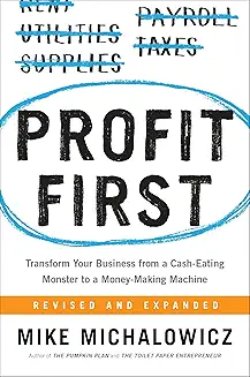
in his book Profit First, offers a different approach. Instead of hoping that profit appears after paying expenses, the system puts profit first.
This simple method has helped thousands of business owners improve cash flow, reduce stress, and build stronger businesses.
What Is the Profit First System?
Most businesses follow a traditional accounting formula:
Sales – Expenses = Profit
The problem is simple. Expenses usually grow with revenue. As income increases, business owners often spend more money on software, advertising, equipment, contractors, and office costs.
As a result, profit becomes whatever remains at the end.
Profit First reverses this formula:
Sales – Profit = Expenses
This change may look small. However, it completely changes how a business manages money.
When profit comes first, entrepreneurs automatically reserve part of their income before spending anything else.
Why Many Entrepreneurs Struggle With Profit
Many business owners focus on revenue. They celebrate larger sales numbers because revenue feels like success.
However, revenue alone does not create financial stability.
Consider two companies:
| Company | Annual Revenue | Annual Profit |
|---|---|---|
| Company A | $1,000,000 | $20,000 |
| Company B | $300,000 | $90,000 |
Many people assume Company A performs better. In reality, Company B generates far more profit relative to its size.
Profit allows entrepreneurs to:
- Build cash reserves
- Invest in growth
- Reduce financial stress
- Survive economic downturns
- Reward themselves for their work
Without profit, a business can appear successful while remaining financially fragile.
How Profit First Works
The Profit First system uses several bank accounts. Each account serves a specific purpose.
Instead of placing all revenue into one account, business owners distribute incoming money into separate categories.
The basic structure includes:
| Account | Purpose |
|---|---|
| Income | Receives all revenue |
| Profit | Business profit |
| Owner's Pay | Personal compensation |
| Taxes | Tax obligations |
| Operating Expenses | Daily business expenses |
Each time revenue enters the business, a percentage moves into each account.
This process creates clear financial boundaries.
As a result, entrepreneurs always know how much money they can safely spend.
Example of a Profit First Allocation
Imagine a business receives $10,000 in revenue.
The owner decides to allocate the funds as follows:
- 5% Profit
- 50% Owner's Pay
- 15% Taxes
- 30% Operating Expenses
The distribution would look like this:
| Category | Percentage | Amount |
|---|---|---|
| Profit | 5% | $500 |
| Owner's Pay | 50% | $5,000 |
| Taxes | 15% | $1,500 |
| Operating Expenses | 30% | $3,000 |
Because the operating expense account contains only $3,000, the business owner must manage expenses within that limit.
This structure encourages smarter financial decisions.
The Psychology Behind Profit First
One reason Profit First works so well involves human behavior.
Mike Michalowicz relies on a concept known as Parkinson's Law.
The principle states that people use whatever resources become available.
If a business account contains $20,000, owners often find ways to spend most of it.
However, if only $5,000 remains available for expenses, spending habits change.
Entrepreneurs become more selective. They cancel unnecessary subscriptions, negotiate costs, and focus on investments that produce results.
The system creates financial discipline without requiring constant willpower.
How to Set Up Profit First in Your Business
Many entrepreneurs can implement the system in less than a day.
Follow these simple steps.
Open Dedicated Bank Accounts
Create separate accounts for:
- Income
- Profit
- Owner's Pay
- Taxes
- Operating Expenses
Some entrepreneurs also create additional accounts for payroll, marketing, or future investments.
However, simplicity works best at the beginning.
Determine Your Allocation Percentages
There is no universal formula.
A freelancer may use different percentages than a retail business.
Start with realistic numbers rather than perfect numbers.
For example:
- Profit: 1% to 5%
- Taxes: 10% to 20%
- Owner's Pay: 30% to 60%
- Operating Expenses: Remaining balance
Small adjustments over time can significantly improve profitability.
Schedule Allocation Days
Many Profit First users allocate money twice per month.
For example:
- 10th of the month
- 25th of the month
On allocation day, transfer money from the Income account into the designated accounts.
This routine keeps the process simple and consistent.
How Profit Distributions Work
The Profit account serves a special purpose.
Business owners should not use this money for routine expenses.
Instead, they accumulate profit during the quarter.
At the end of each quarter:
- Take 50% as a reward
- Leave 50% inside the business
This approach creates a direct connection between business performance and personal reward.
Entrepreneurs often work for years without enjoying the benefits of their efforts.
Profit First changes that pattern.
Common Mistakes When Implementing Profit First
Many business owners make avoidable mistakes during the first months.
Starting With Aggressive Percentages
Some entrepreneurs attempt to allocate large profit percentages immediately.
This strategy can create cash shortages.
Instead, begin with small percentages and increase them gradually.
Using the Profit Account for Emergencies
The Profit account should remain protected.
If owners repeatedly raid this account, the system loses effectiveness.
Ignoring Expense Problems
Profit First reveals financial weaknesses.
Sometimes entrepreneurs discover that operating expenses consume too much revenue.
This insight creates an opportunity to improve the business.
Avoid ignoring these warning signs.
Benefits of Profit First for Small Businesses
Many entrepreneurs report noticeable improvements after implementing the system.
Common benefits include:
- Better cash flow visibility
- Reduced financial stress
- Higher profitability
- Improved budgeting decisions
- Stronger emergency reserves
- Better tax preparation
- Increased owner compensation
Because money receives a specific purpose, financial management becomes easier.
Is Profit First Suitable for Every Business?
Profit First works particularly well for:
- Freelancers
- Consultants
- Coaches
- Agencies
- Service providers
- Online businesses
- Small professional firms
Some industries may require adjustments.
Businesses with large inventories, heavy manufacturing costs, or significant capital investments often need customized percentages.
Nevertheless, the core principle remains useful.
Every business benefits from prioritizing profit rather than treating it as an afterthought.
How Profit First Supports Long-Term Business Growth
Many entrepreneurs believe growth requires spending more money.
Sometimes that is true.
However, uncontrolled spending often creates risk.
Profit First encourages efficient growth.
Business owners learn to:
- Focus on profitable clients
- Eliminate waste
- Improve pricing
- Increase efficiency
- Build cash reserves
As a result, growth becomes more sustainable.
The business develops a stronger financial foundation.
Final Thoughts on Profit First
Profit First offers a simple but powerful financial framework for entrepreneurs.
The system challenges a common business habit. Instead of paying everyone else first and hoping profit remains, entrepreneurs reserve profit from the beginning.
This approach improves financial discipline, strengthens cash flow, and creates healthier businesses.
Most importantly, Profit First reminds business owners why they started their companies in the first place. A business should not only generate revenue. It should also generate profit.
By implementing even a basic version of the Profit First system, entrepreneurs can take greater control of their finances and build a business that supports both growth and long-term financial stability.
About the Book: Profit First by Mike Michalowicz
The Profit First system, created by Mike Michalowicz, offers a simple approach to managing money by taking profit first and allocating the remaining funds to expenses. It helps business owners improve cash flow, build profitability, and gain better control over their finances.